
Bacterial Adaptation and Physiology
The Bacterial Adaptation and Physiology group investigates how bacteria adapt to and interact with the human host environment, and how these processes influence infection persistence and treatment outcomes. We combine patient-derived material and clinical isolates with experimental infection models and molecular approaches to understand bacterial behaviour in human disease. We aim to translate this knowledge into improved diagnosis, prevention and treatment.
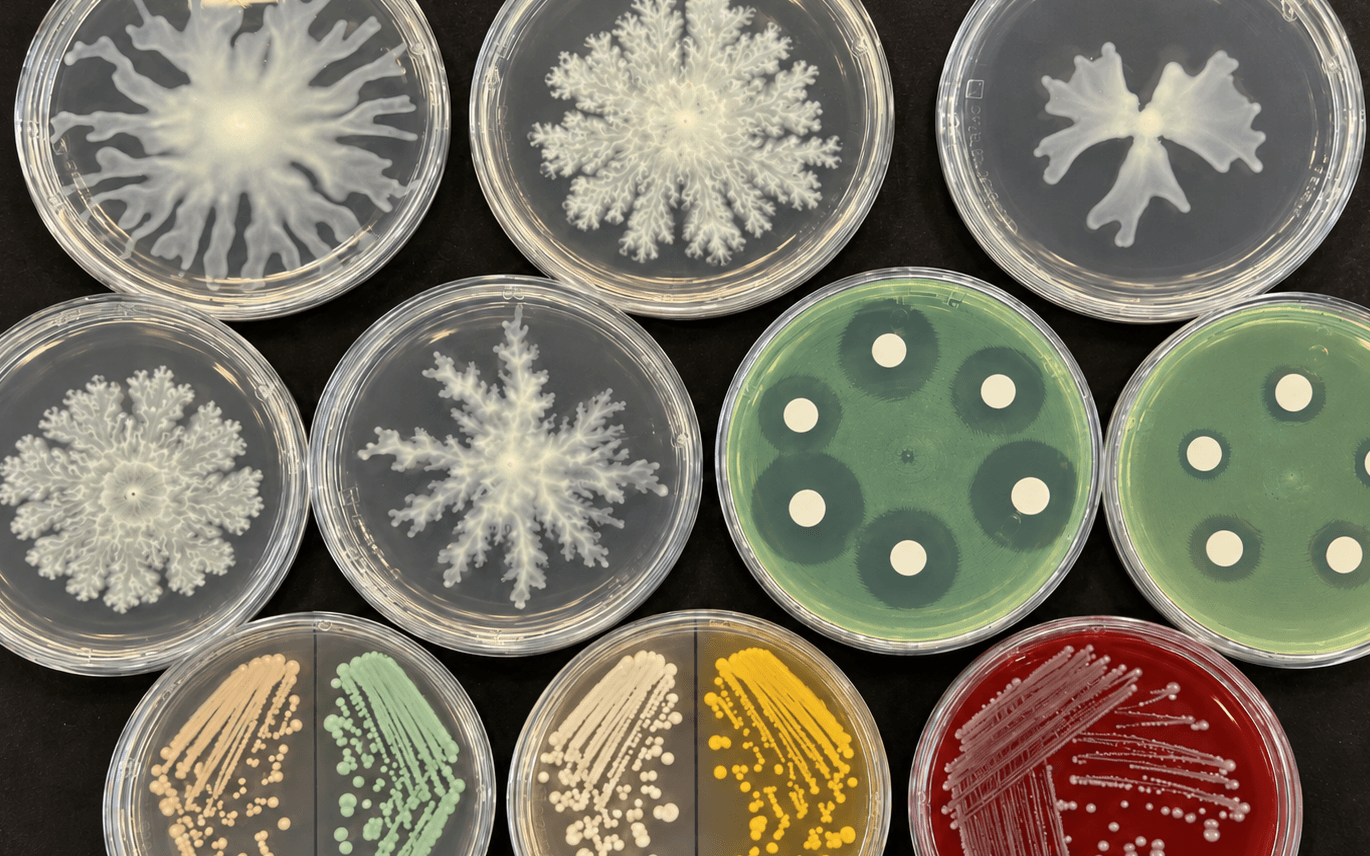
Many difficult-to-treat infections cannot be explained by antimicrobial resistance alone. Within the host, bacteria encounter changing conditions shaped by nutrient and oxygen availability, immune responses, antimicrobial treatment, tissue damage and other microorganisms. These conditions can select for genetic adaptations and trigger reversible physiological changes that influence bacterial survival, virulence and susceptibility to treatment. Understanding how these processes sustain infection is central to our research.
We use patient material and longitudinal collections of clinical isolates to track genetic and physiological changes in bacterial populations within individual patients. By combining whole-genome sequencing, transcriptomics and phenotypic analyses, we examine how these changes relate to the local infection environment and clinical outcomes. Complementary in vitro and ex vivo infection models allow us to investigate the underlying mechanisms under controlled conditions that reproduce key features of the human host environment.
Current research spans chronic wound infections, combat-related wound infections, implant-associated infections and urinary tract infections. Across these clinical settings, we investigate bacterial adaptation, antimicrobial resistance, quiescence, biofilm physiology and host–pathogen interactions. We examine how these processes contribute to infection persistence and treatment outcomes.
Our research is supported by the following funding bodies and foundations:
- European Defence Fund
- National Defence Technology Centre
- Læge Sofus Carl Emil Friis og Hustru Olga Doris Friis' Legat
- Brødrene Hartmanns Fond
- Aase og Ejnar Danielsens Fond
- Vera og Carl Johan Michaelsens Legat
- Fonden til Lægevidenskabens Fremme
Our research brings together experimental microbiology, clinical medicine, bioinformatics and infection modelling. We work closely with clinical partners at Copenhagen University hospitals, including the Copenhagen Wound Healing Center, clinical microbiology departments and other departments involved in treating complex infections. These collaborations provide access to well-characterised patient material and enable us to develop and address research questions grounded in clinical practice.
Our international collaborators include groups at the University of Washington, Texas Tech University, the University of Rhode Island, Ghent University, Oxford University Hospitals and the Pasteur Institute. Together we investigate bacterial infection biology, chronic wound infections, antimicrobial resistance and host–pathogen interactions. We also work with clinical and academic partners in Ukraine on combat-related infections and antimicrobial resistance and participate in European collaborations addressing emerging infectious threats.
Our publications explore bacterial adaptation, biofilm physiology and host–pathogen interactions, with a focus on infection persistence, antimicrobial resistance and treatment.
Link: Researchprofiles
>200 national and international newspapers, popular science magazines and science websites.
Press releases:
- Fungi and bacteria grow on body implants, SUND faculty (UCPH), 3/7/2018
- Garlic can fight chronic infections, SUND faculty (UCPH), 16/11/2017
- Garlic counteracts virulent bacteria, SUND faculty (UCPH), 18/2/2014
- Garlic constituent blocks biofilm formation, could benefit cystic fibrosis patients and others, American Society of Microbiology (ASM), 2012
Selected interviews/articles:
- Bakterier hader hvidløg, Ingeniøren, 6/5/18
- Pneumonia symptoms could fought off by eating garlic, scientist reveal, EXPRESS, 6/12/17
- Radio interview at BBC radio, 5/12/17
- Garlic can help beat superbugs, Daily Mirror, 4/12/17
- National Geographic, 30/11/17
- Garlic can fight chronic infections, Daily Sun, 30/11/17
- Hvad hjælper mod forkølelse, Videnskab.dk, 2/2/17
- Hvidløg mod sygdom, BT, 1/3/2014
- Hvidløg kan hjælpe immunforsvaret, Berlingske, 1/3/14
- Hvidløg bekæmper bakterier, B.dk, 27/2/14
- Fremtidens medicin lugter af hvidløg, Jyllands-Posten, 20/2/14
- Spis 50 hvidløg om dagen, Jp.dk, 20/2/2014
- Derfor virker hvidløg mod livsfarlige bakterier, B.dk, 19/2/14
- Hvidløg hæmmer livsfarlige bakterier, Videnskab.dk, 19/2/14
- Garlic counteracts virulent bacteria, ScienceDaily, 18/2/14
- Hvidløg kan hæmme multiresistente bakterier, Go.tv2.dk, 18/2/14
- Konsten att förstå bakteriernas språk, Forskning&Framsteg, 1/2/14
- Hvidløg virker mod dødelig sygdom, BT, 6/6/12
- Hvidløg dæmper dødelig sygdom, Jyllands posten, 6/6/12
- Hvidløg bekæmper cystisk fibrose, DR.dk, 5/6/12
- Hvidløg dæmper cystisk fibrose, Videnskab.dk, 5/6/12
Staff list
This content is temporarily unavailable because the system it is fetched from cannot be reached. The rest of the site works as usual.
Status is available on the operating status page.